Monday, February 27, 2012

Storage Places – Where Stuff Lies in Darkness and Indecision


          The designated weekend had arrived.  Weeks ago I saw these ‘free’ days on the calendar and promised myself that this would be the time to tackle the storage room.  This was a job that would require energetic focus with no distractions. The task itself would produce its own distractions –which I call the inevitable exit ramps to pause and consider what to do with ‘this and that’.  I was planning to stay the course until it was done. 

          The goal?  To bring order out of chaos.  To make decisions about what stays/goes and why. To clean – ridding the area of cobwebs, dead bugs, insulation and dirt. The storage area consumes half of our basement. It houses our art supplies and serves as our workspace, it holds infrequently used household items (turkey roaster, Crockpot, serving trays),  clothing and coats for other seasons, good books worth keeping for work projects but not our faithful texts, recreational gear (golf clubs, ice skates, tennis rackets, camping supplies, mini-tramp, hula hoop, rowing machine), memorabilia and family artifacts, ‘important ‘ documents, household repair items (tools, tubes of fix-it goo, paint, extra flooring tiles ) and probably even more.   So wanted to run away, but I couldn’t.  I made a cup of tea, took a deep breath, and opened the door into the overwhelming vastness awaiting me. 


          Dear Reader:  Maybe this is the time for you to pause and list the items in your storage space.  Wonder if we have the same things? 
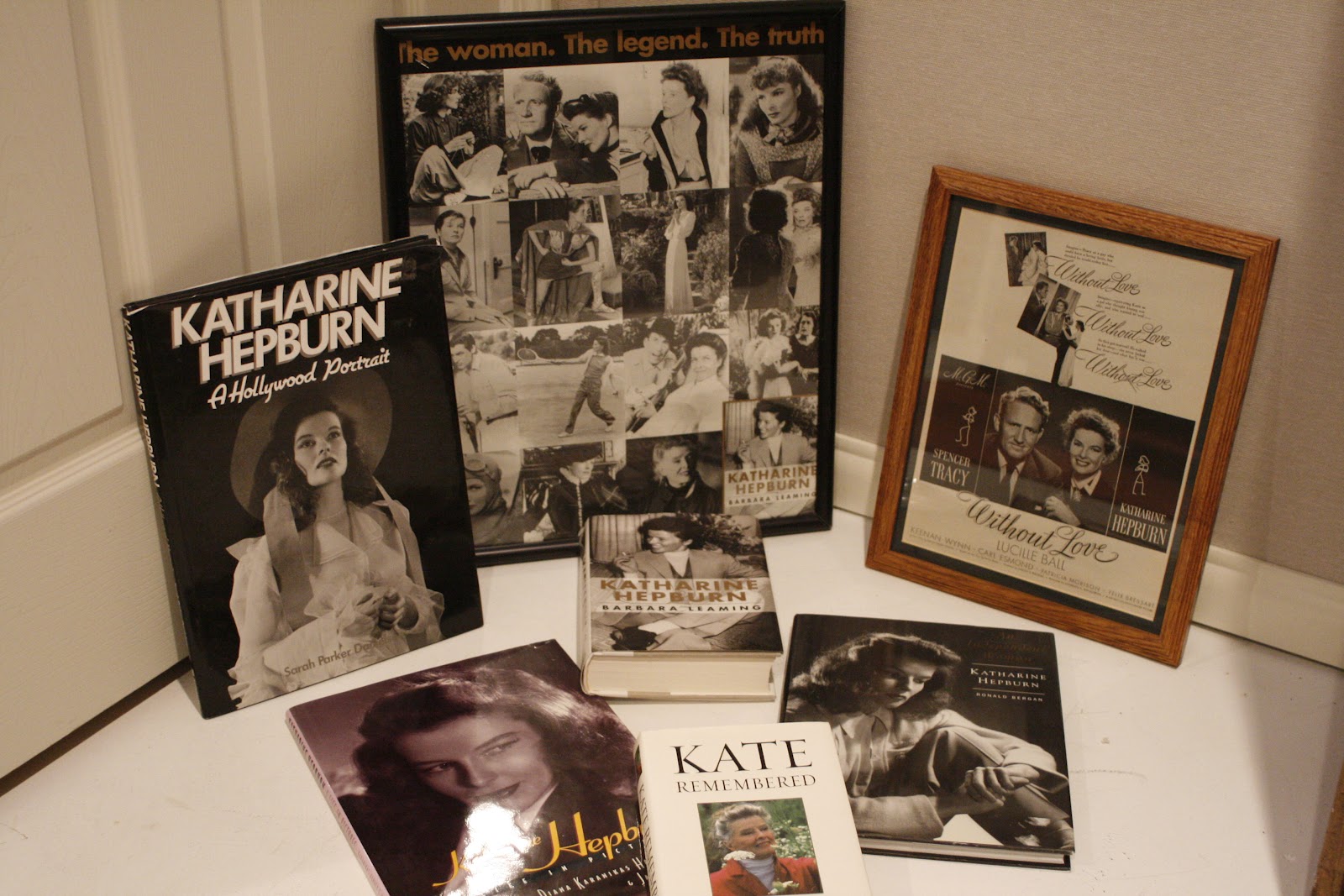
          I was prepared for this task with empty boxes to load for Goodwill,  my camera nearby to document items for Craig’s list (anyone interested in part of my Katharine Hepburn collection?), and the Shop-Vac!  Before long I was bringing like items together – all paint supplies landed on the same shelf!  I was seeing improvement! I was making decisions around what stayed and what went like how many casserole dishes I really needed. Two quickly moved to the Goodwill box.  A butterfly net?  To the grandchildren it goes!  I was feeling empowered! The Shop-Vac was busy sucking up knowns and unknowns, making it almost fun to keep going.  I was so thankful for its huge black hose and the sound it made when finding things!         

          I had made an early decision to NOT open every ‘important’ document and memory box.  Too much information for this weekend’s task.  Too many decisions and emotional exit ramps to navigate in this narrow timeline. I was so thankful for making this clear boundary. A new stacking and ordering of boxes was in place for another time.

          Then it happened.  Depression and guilt set in as I realized that we hadn’t used our tennis rackets in three years, the camping gear had not made it to a state park but once last summer, and those beautiful golf clubs - too long ago to remember. This required an emotional ‘exit ramp’ from the task at hand! A huge sigh came first, then a reality check about why this was true, a bit of cheerleading was heard around the edges, followed by a new resolve that this year would be different!  Please!!!  Whew! So grateful to get out of that closet alive!!

          Now the rest of the story . . . days later I am still feeling empowered by the results of that intense weekend.   Yes, there is more to do.  Those boxes of ‘important’ documents and family memorabilia are clearly visible when walking into the storage room.  I know they are patiently waiting and that another day will find me courageous and ready to explore their contents.  Just know it is not today!

Tuesday, February 14, 2012

Rocks and Their PLACES

                  I don’t know when it began.  It just did.  Suddenly I was seeing rocks and finding them ever so interesting.  Sometimes it was the color that caught my attention.  Sometimes it was the shape that made me pick it up and remove it from its ‘place’.    Whether I kept the rock usually depended upon how it felt nestled in my hand.  It was this tactile experience that issued the invitation for a rock to join my beloved ‘rock family’. (I simply cannot call it a ‘rock collection’ for that sounds so heartless – implying they are acquisitions intended to grow in number without discretion which is not the case.)


          Rocks decorate our home . . . on window ledges, in pottery bowls, in baskets and plants . . . fortunately my husband appreciates rocks as well.  On our recent trip to England – independent of the other – we were both picking up rocks from our land of lineage to bring back with us.  In Dover I requested three hours to savor and sense the rocks beneath my feet as I ‘walked the rocks’ along the beach.  My eyes were glued to the textures and shapes that tantalized - then touching – holding them in my hands – rubbing them between my fingers.  Each taught me something about my homeland – about me.  The Dover stones – so unusual because of the chalky cliffs and the English Channel – still felt familiar.  A reminder of a place deeply known in my bones.

          On one English ramble in the Cotswolds, we picked up what is known as a Cotswold stone – a beautiful butterscotch color found in so many of the buildings and homes in that part of the country. It feels like a worker stone – rough and angular - one that is intended to be part of a community to create a place, a structure. It’s not a stone you quickly notice by itself, but corporately - in the finished product. Just seeing it takes us back there. 


          Our trip to the Pacific Ocean last summer found us fascinated by rocks that were round and smooth and flat.  Again, I spent hours walking the rugged coastline.   My ‘family’ started growing and I began stacking them one on top of the other.  I remembered the importance of ‘stacked stones’ to the Intuits living in the frozen tundra.  Called INUKSUK’s, the stacked stones were a means of communication – letting others know the way to find shelter or food in a land of snow and ice.  What were my stacked stones communicating?   Was there more than just my awe of such simple beauty?  Why do I have altars of stones throughout my home?  Why do I find rocks so captivating?

          On the southern edge of Lake Superior we came upon a small bay that gifted us with a unique rock called a 'concretion' - the word coming from the Latin con, meaning 'together', and cresco, meaning 'to grow'. According to the Wisconsin Geological Survey, these grown-together rocks began forming about 20,000 years ago in Lake Superior.  Concretions remain something of a mystery to geologists, who believe they formed when minerals crystallized around a decaying plant or fish bone.  Water pressure and wind erosion helped create their interesting
shapes. 


          To describe a concretion is somewhat difficult as they vary, but each one looks rather odd and interesting – reminding one of ‘something’ else.  One might look like a crescent roll while another is very flat and resembles ripples in a lake. To the Native Americans in this part of the country, concretions are deeply respected for the wisdom and uniqueness they are believed to hold.  They are called ‘spirit stones’ or ‘grandfather rocks’ with each rock holding a special spirit and message gifted to the one who finds it.


          So perhaps my yearning and fascination around rocks and stones is to find the spirit within.  Each holds the mysteries of how it was formed, why it landed in a certain place, and now, that it allows itself to be found by me.  When daughter, Kate, left for college – I searched for a rock that perfectly fit into the palm of my hand and gave it to her with these words:  “If you need me for any reason, just wrap your fingers around this stone and know I am with you.”  A ‘spirit stone’ for sure, infused with a mother’s love.  

          To each of my stones, rocks and pebbles now living in a new place – far away from where I found you  . . . thank you for gifting me reminders of the places you once lived, of the ‘spirit of place’ within you!

Thursday, December 8, 2011

What’s Involved in an English Ramble? LOTS!


          One of the most anticipated aspects of our recent trip to the English countryside was to take several ‘rambles’.  England and Wales have over 140,000 miles of public footpaths that make ‘walking for pleasure through the countryside’ a guarantee.  These footpaths are considered a public right of way and only traveled by foot.  “Legally, a public right of way is part of the Queen’s highway and subject to protection in law as other highways.”

          My amazement was how these footpaths traverse over private property where the “ landowner has a duty to prevent crops from making the path difficult to find or follow AND a rambler has every right to walk through crops growing on or over the path as long as one follows the correct line.” It’s a rule of the road! 

          Having an official guidebook to chart a ramble was imperative to our experience.  Both map and narrative were keys to making the journey.  Here is a section of the directions that made our travel from Bibury to Coneygar achievable.  Truly – we would have lost our way otherwise!  I love how ‘care for the traveler’ includes notations on places to eat, resting spots for catching your breath, landmarks to keep you confident that you are on the path, walking conditions, and when to take in the view!

          Distance:  4.5 miles  Allow:  2.5 hours

          Park near the bridge over the River Coln in the center of Bibury, as the walk starts and ends opposite the Swan Hotel.  This walk has eating and drinking places at the beginning and again at the end. . . Set off from the bridge, following the B4425 road towards Burford, keeping the River Coln on your right. . . Leave the main road and walk straight ahead into the 'no entry' road and head for the church, still keeping the river on your right. . . Along here the tiny cottages         seem to crowd in on you from both sides as you climb the gentle slope. Ignore the track going off to your right and continue straight ahead up the slope.  

          Here is a good opportunity to catch your breath and look back on a truly unforgettable view of the river, valley and manor house . . . At the top of the slope the track becomes a muddy path which sweeps off left and you continue to follow it, still with the river on your left.  Ignore any paths going off to your right.  You have a wood and a dry stone wall on your left for the next part of the journey. When the path peters out go through a wooden gate and continue in the same line with the wall still on your left.  Remember this is a well used 'bridal way' so if the weather has been wet this path can become very muddy and slippery.  

          Gates and stiles are part of the journey and the excitement.  Because the footpaths travel through pastures, animals are in the vicinity and need to be protected.  A known ‘rule of the road’ is to close all gates behind you. Sometimes a stile rather than a gate is encountered.  Stiles are designed with primitive steps to require you to step up and over the fences. We discovered that these rambles also demanded agility and flexibility!

          Indeed, our rambles exercised both our muscles and hearts.  Breathtaking views, charming stone walls, the dash of pheasants in the field, the curiosity of sheep suddenly needing to share the path, the giddiness of our voices has we were constantly referring to the map and our location in the narrative directions.  (Once we found ourselves facing the sign BULL LOOSE IN FIELD and quickly diagnosed we had most certainly lost our place!)

          All in all we held a deep respect for the gift that private landowners give to the people of England. We felt a sense of responsibility to honor the code of that civic and long held covenant meant to share and provide enjoyment of the English landscape.  And just as English rocker, Led Zeppelin’s words invite us to Ramble On, I eagerly look forward to my next ramble, my next visit to the English soil.


Discover more about spaces and places at www.spatialimpact.com


Friday, November 18, 2011

LOOKING UP


          It dawned on me when in England recently, that in looking at buildings I do not often find myself looking up.  I could speculate on a number of reasons why this might be so, but in general I would say, is the  top of a building interesting enough to catch my attention?  Usually not.  What I do know is that when I landed on the English soil, suddenly I was drawn to the tops of buildings.  I was constantly ‘looking up’.   They were interesting and unique.  Each building ‘top’ had a personality that made me smile.  Some called for respect and dignity while others seemed more playful and artistic.  All  claimed  importance as a finishing touch to the building served.

           While my camera kept catching the chimneys, my writings described them as ‘a line of pottery jugs sitting on a shelf’.  I found them charming in every way.   No two were the same. Even on the row houses – each chimney was a bit different.  The number, the shape, the height of the ‘pottery jugs’ . . . each chimney claimed its own voice as it spoke to the sky above.   I began to think of buildings that make us look up - that seem to speak to the sky above.

          Cathedrals!  Anyone who has visited a European city, village, or town knows that the church steeples can be seen from miles away.  Often it is the ‘top of the church’ that we see before anything else.  They stand out.  They are noticed. They claim an importance.

         Historical information indicates that the  design of the steeple was to make the church visible from every part of town - similar to a tracking device that helps one navigate and find a location.  Steeples were to be the tallest structure in the town which also spoke to the importance of the church to the community’s life as a place to gather, discuss, connect, learn, and worship.

        There were two other important features of church steeples and both relate to communication.  It is in the steeple that the bells are located.  They were sounded at times of potential danger such as fire or an attack on the town - just as they were rung for religious celebrations and high holy days.  In some cases the steeple also acted as a lantern, providing light to the center of the town.  


         The words of Karl Phillipp Moritz ring true for me as well as I reflect on English buildings . . .  Westminster Abbey, the Tower, a steeple, one church, and then another, presented themselves to our view; and we could now plainly distinguish the high round chimneys on the tops of the houses, which yet seemed to us to form an innumerable number of smaller spires, or steeples.  

         The tops of buildings!  Personalities like artwork.  Certainly makes it worth ‘looking up’! 


And thus begins a series of blogs on English place stories . . .


To learn more about how spaces impact our behaviors visit spatialimpact.com

Wednesday, September 14, 2011

THE STORY OF SIMPLICITY - Our American Foursquare


‘According to ancient Roman belief, every independent being has its guardian spirit.  

This spirit gives life to people and places, accompanies them from birth to death, and determines their character or essence.’ (Phenomenology)  


          To think of each place as having a guardian spirit, a character that is basic to it, reminds me again of How Buildings Learn by Stewart Brand.  In this book he takes a look at the multiple lives a building has in its lifetime.  Some buildings are designed to be adaptable, but most are built for a specific use that defines its character. A home, school, church, and an office building each have a specific use and thereby creating a different human experience. Historical buildings have committees who advocate for the ‘character and essence', but many others do not.  When the building’s spirit or character is compromised,  we can experience it as miss-matched or it may produce a negative or confusing feeling within us.


          In 2001, my husband and I purchased an American foursquare house.  This style of home architecture was built from 1895 – 1930 and had distinctive qualities: a box shape,  five panel doors, simple in design, and suited to make use of every inch of the house and lot.  We named the house ‘Simplicity’. She was built in two parts - the first structure at the turn of the century and the back section added in the 1920's. With each home decision we have attempted to keep the intention of its character, its essence. The simple lines of the window molding have not been hidden by draperies when possible.   Carpeting has not been laid over the beautiful wooden floors.  The three open porches are used as outdoor living spaces. Simplicity’s front door graces a hand-turned rather than an electric door bell.  One of the bathrooms houses a claw foot tub that welcomes relaxing bubble baths.  Everything is simple, minimal, and yet enough.


          Each of these decisions to maintain its essence as ‘simplicity’ has invited us to live simpler lives.  The first floor's ten and a half foot ceilings grace us with expanded space to breathe.  One of the rooms contains floor to ceiling shelving, more than likely intended as a pantry.  In our current lifestyle, this room was first transformed into the library, offering us a quiet and reflective place. Now one of our offices resides there.  The living room is arranged for storytelling and conversation. Chairs and sofas, lamps and tables create inviting nooks to hold the entertainment of one or more.  Our front dining room is used on most days and invites us to linger over a meal, share with others, and host celebrations. The kitchen is large and in the middle of the house. Tall double-hung windows invite natural light from the East and the West into this hub of the home - the place where people gather and from which smells of hospitality come as meals are prepared and shared.


          Simplicity has had other lives.  Stewart Brand says, ‘The house and its occupants mold to each other twenty-four hours a day, and the building accumulates the record of that intimacy.’  Prior to being rescued from demolition, moved to its present site and then remodeled, Simplicity housed a hair salon and tailor’s shop on the first floor with an apartment above. Earlier the house was the family home of a well-known elementary teacher in the village. Each of these ‘lives’ has been recorded in this place.


 ‘This spirit gives life to people and places, accompanies them from birth to death, and determines their character or essence.’   

People seem to enjoy coming to Simplicity.  She holds their stories and lives well.  She has been described as hospitable, uncomplicated, calming, safe, refreshing, and inspiring.  She sits well on her new lot.  We have added flowerbeds, trees and shrubs to complement her. When we are seated on the front porch we often hear, “We love your house” from those who walk by.  Perhaps this is because we have tried to listen and honor her ‘spirit’ in the transitioning of a turn of the century home into twenty-first century living.  

Learn more about spaces and places  . . .   www.spatialimpact.com

Wednesday, September 7, 2011

BUILDINGS SPEAK A LANGUAGE


“ . . . When you build a thing you cannot merely build that thing in isolation, but must also repair the world around it, and within it, so that the larger world at that one place becomes more coherent, and more whole; and the thing which you make takes its place in the web of nature, as you make it.”  From A Pattern Language: Towns, Buildings, Construction

          Take a look around.  How often do we see buildings that stick-out and feel strange in their environments?  In the same breath, we also view buildings that are well matched to their settings. Some buildings have gardens or green space around them.  Others are found in the midst of change. In transitional neighborhoods an historic or older building may still be trying to hold a place of dignity.  It is also very likely that it is serving a different purpose than when it was first built. It is living a second or third life.

A Place in the Neighborhood

          The way a building sits in its 'neighborhood' speaks volumes.  Our human condition intuits whether this is a place we wish to enter. We look for places that welcome.  Seeing the exterior of the building and how it is involved with its environment shapes a first impression. Is it complimentary with the other buildings in the area?  Does it enhance the site?  Is there the possibility of planned green space? Is the signage fresh looking and easy to read?  Have people cared for the facility? Buildings that have been given care suggest that the people inside will do the same for us.

          Many buildings simply look sad.  Rather than being complimentary and enhancing their neighborhood, they look tired, out of place, or as a keeper of the past.  It looks as if all energy has left. We may be hesitant to enter. We may make assumptions about the people and businesses inside. A building’s place in the neighborhood is important. It shapes the neighborhood by being involved in the life of that land, location, and space.


Buildings Speak a Language

          Our buildings speak a language. They tell us whether they are loved or ignored. They tell us of the energy and spirit of those who use them. They easily invite or distance a guest. They encourage or complicate new ideas. Does this building look tired and out of date or refreshed and vital? Is everyone able to enter safely, comfortably, without hesitation? What is this building saying to those who pass by? What does it say about what we do, who we are?  In designer Helen Berliner’s words, “What is the MOST we can GIVE to users of this place, to its surroundings and community, to the future, and to all of life?”  A building is carefully planned by paying attention to the lives and needs of people.  What is the MOST our buildings can GIVE to the people they house and the neighborhoods in which they live?

See more about space consulting at www.spatialimpact.com

Thursday, September 1, 2011

A PLACE on the Calendar


          It’s September lst.  Its PLACE on the calendar means that today is the first day of a new month.  In our culture, September has long been thought of as the beginning of the fall season.  Summer is behind us.  The time for vacations and summer activities has come to a close. The summer foods begin to fade away (fresh sweet corn comes to mind), while apples and squash begin to make an appearance.  

          The PLACE on the calendar tells us that a new schedule awaits us - a new rhythm to our days and weekends is before us.  In some ways it invites a renewal of the everyday and ordinary life.  The days of living outside are changing.  We begin to plan indoor house projects, clean the closets, schedule our lives differently.  Meetings that were on hiatus during the summer start up again.  A new eight week yoga session invites us. Just as the children purchase new school supplies and clothing, even we, who are long past living in the cadence of the school year, start anew as well. 

          Today on my walk/run, I felt like that familiar phrase – ‘Today is the first day of the rest of my life!’  Yes, I can do this.  It is good for me.  Begin the day with yoga then walk.  I can do this!  I know how great I feel when I do.  Certainly this can be my every day morning practice. Yes!     (By the way - I am not lending an ear to that inner voice that doubts the renewed commitment to fitness by saying – Wonder how long this will last?)

          What is it about a PLACE on the calendar that gives energy, intensity, a readiness for something new, a commitment to that which makes us a better person?  What fall foods are you eager to taste? (Oh my – pumpkin pie and caramel apples come to mind!  Never think about them in the summer.)  What favorite sweaters are about to replace those summer sleeveless shirts?  Have you traded your allegiance from baseball to football?  What flowers have had their day in the sun and now those that have waited for this PLACE on the calendar are becoming colorful? What new ‘thing’ are you about as this PLACE on the calendar announces its arrival?  Let me know . . .


Learn more about PLACES and SPACES at www.spatialimpact.com